
News
PREVIEW: Para Powerlifters striving for Day One medals as Glasgow begins
Published Tue 21 Jul 2026
Original articel posted on https://commonwealthgames.com.au - (Link)
July 21, 2026
By Sarah Dyce
Barbells will bend and history will be made when Para Powerlifting opens the Glasgow 2026 Commonwealth Games, with Australia’s largest-ever team in the sport chasing the very first gold medals awarded at the Games. All four Para Powerlifting titles will be decided on Day One, the earliest medals handed out at Glasgow 2026.
Overview
Australia’s six-strong Para Powerlifting team blends three athletes with Commonwealth Games experience and three debutants, spanning both weight categories on the Glasgow 2026 program.
In the women’s competition, debutants Natasha Price (QLD) and Jade Pritchard (NSW) contest the lightweight, while Hani Watson (QLD) lines up in the heavyweight. On the men’s side, debutant Daniel Bos (NSW) fights it out in the lightweight, joined in the heavyweight by Benjamin Wright (WA) and Cameron Whittington (NSW).
At 29, Bos is the youngest member of the squad, while Price, 45, is the most experienced by age. NSW leads the state representation with three athletes, followed by two from Queensland and one from Western Australia.
Ones to Watch
Australia
Wright is preparing for a fourth Commonwealth Games appearance, becoming the first Australian Para Powerlifter to reach the milestone after competing at Glasgow 2014, Gold Coast 2018 and Birmingham 2022, where he won bronze in the men’s heavyweight.
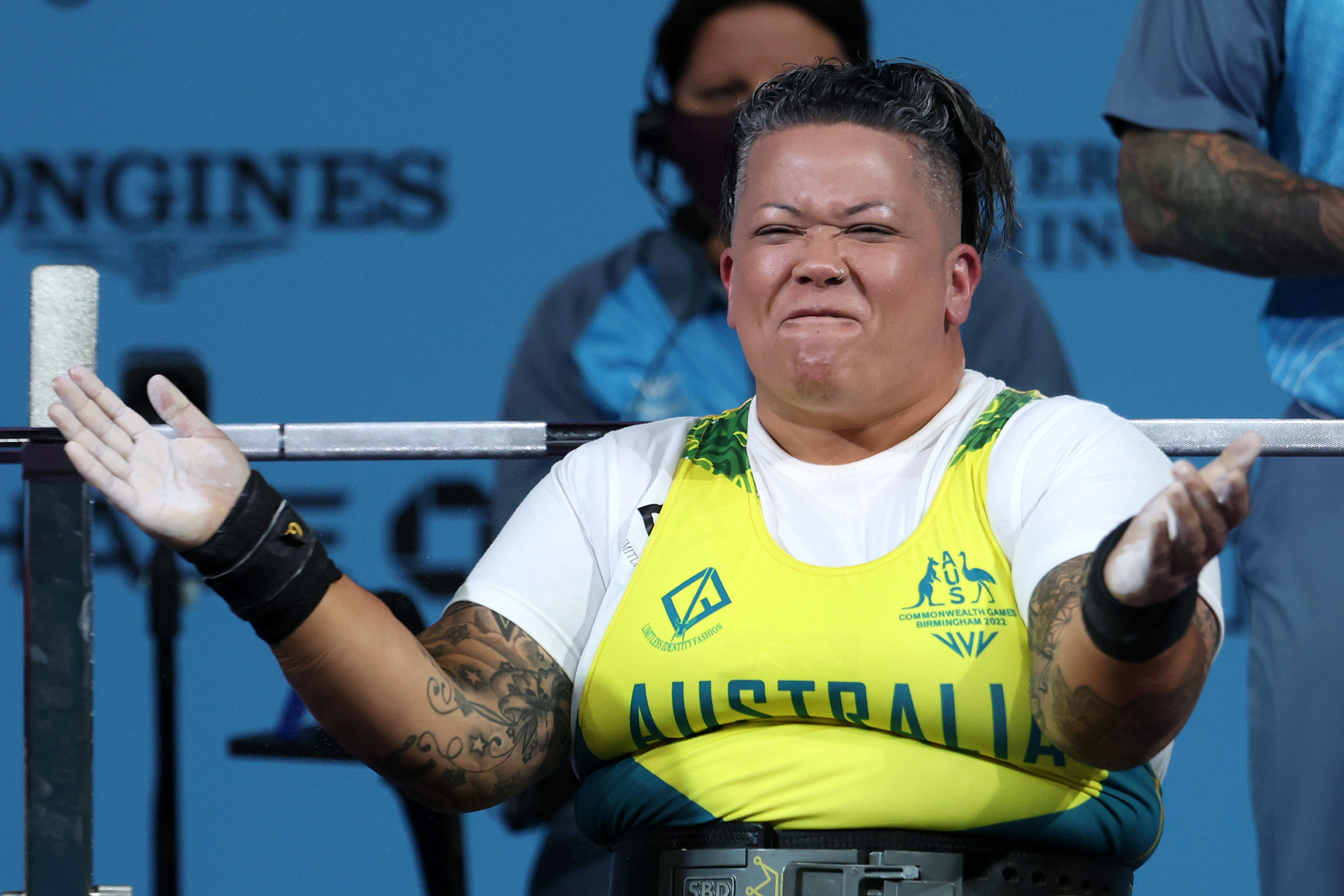
Watson broke a 16-year Australian medal drought in the sport with bronze in the women’s heavyweight at Birmingham 2022 and returns to Glasgow aiming higher.
Bos, who mixes powerlifting with acting, will make his Commonwealth Games debut in the men’s lightweight.
International
Malaysia’s Bonnie Bunyau Gustin won men’s lightweight gold at Birmingham 2022 and then set a world record lift to win gold at the Paris 2024 Paralympics, returning to Glasgow as the man to beat.
Nigeria’s Folashade Oluwafemiayo dominates the women’s heavyweight: gold at Birmingham 2022, a world record lift for gold at Paris 2024, and a further improvement on that record in Cairo last year. Birmingham 2022 also produced a rare break from Nigerian dominance, with England’s Zoe Newson winning the women’s lightweight before retiring from the sport, and India’s Sudhir Sudhir originally winning the men’s heavyweight before a later disqualification handed gold to Nigerian runner-up Ikechukwu Obichukwu.
Sport Format
Para Powerlifting is contested exclusively in the bench press, open to athletes with a physical disability including cerebral palsy, spinal cord or nerve injury, short stature or limb loss. Unlike most Para sports, athletes aren’t classified by disability type: they’re deemed eligible to compete and then allocated to a weight class based on bodyweight.
Of the sport’s 10 international weight classes, only two are contested at the Commonwealth Games: lightweight (up to 72kg for men, up to 61kg for women) and heavyweight (over those thresholds). Each category is decided by a single straight final across three rounds, with lifters attempting in order of the weight they’ve nominated and the bar never lowered within a round.
Lifters lie flat on a specially designed 2.1m x 61cm bench that narrows to 30cm at the head. After the start signal, they lower the bar to their chest, hold it motionless, then press it to arms’ length with locked elbows. Once the bar is held steady, the “rack” signal is given and the bar is returned. Three referees each control a white light for a successful lift and a red light for a no lift.
Athletes get three attempts, with two minutes to complete each lift once the bar is loaded, and their best successful lift determines their result. A fourth attempt, with a three-minute time limit, may be permitted at the jury’s discretion for a world record attempt, though it doesn’t count towards the final result.
Medals are decided using the International Paralympic Committee’s AH (Haleczko) Formula, which multiplies each athlete’s best lift by a coefficient based on their bodyweight, meaning the athlete who lifts the most weight doesn’t always win gold. Where two athletes record the same score, the lighter lifter is ranked higher.
Competition Schedule
Para Powerlifting runs entirely on Friday 24 July 2026 (Day One) at the SEC Armadillo on the Scottish Event Campus, with all four medal events, finals and medal ceremonies decided across two sessions on the same day (times listed are GMT+1).
Session one runs from 1pm to 4pm, featuring the Men’s Lightweight and Women’s Lightweight finals and medal ceremonies. Session two runs from 6pm to 9pm, featuring the Women’s Heavyweight and Men’s Heavyweight finals and medal ceremonies.
Fast Facts
- Para Powerlifting is a bench press-only discipline testing upper-body strength; many lifters bench press two to three times their bodyweight.
- Men’s Para Powerlifting made its Commonwealth Games debut at Manchester 2002 as an open-weight event; the women’s competition joined at Delhi 2010.
- The sport was contested as part of the weightlifting programme until Glasgow 2014, when it was recognised as a standalone sport with four medal events split by gender and weight class.
- Australia has won four Commonwealth Games Para Powerlifting medals: Richard Nicholson’s silver (Open, 2002), Darren Gardiner’s bronze (Open, 2006), and bronze medals from Watson and Wright at Birmingham 2022.
- Wright’s Glasgow 2026 selection makes him Australia’s most-capped Para Powerlifter in Commonwealth Games history, with four appearances (2014, 2018, 2022, 2026); Watson holds the equivalent women’s record with two (2022, 2026).
- Nigeria leads the all-time Para Powerlifting medal table with 24 medals, including 14 gold, well clear of second-placed England on nine medals (one gold).
Partners


